Radiation Therapy Tattoos: What They Are, Why They’re Used, and What to Expect
Jul 09, 2026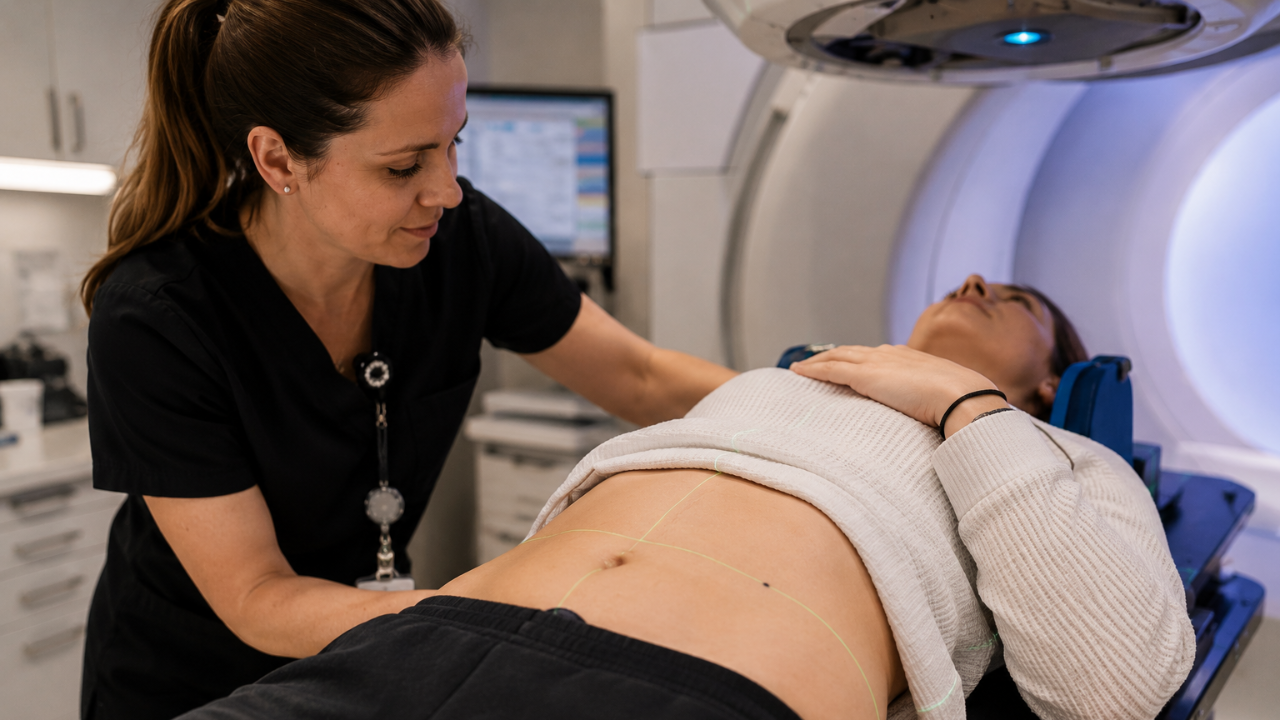
Radiation therapy tattoos are small, permanent marks used to help align your body during treatment so radiation can be delivered accurately.
If you are preparing for radiation therapy, you may hear your team mention something that catches you off guard: tattoos.
This is one of the most common moments during the CT simulation process where patients pause and ask follow up questions.
Why would I need tattoos for radiation therapy?
It is a very reasonable question.
A quick reflection: For many patients, this is another point where treatment starts to feel more real. You are not just talking about radiation anymore. You are making small, physical changes to your body in preparation for it. If that brings up any hesitation or emotion, that is a very natural response.
Let’s walk through what these tattoos are, why they are used, and what you can expect.
What Are Radiation Therapy Tattoos?
Radiation therapy tattoos are very small, permanent marks placed on your skin during your CT simulation appointment.
They are typically the size of a small freckle or a pinpoint.
These marks are used as reference points to help your radiation therapy team position your body accurately for each treatment.
Why Are Tattoos Used?
Radiation therapy is built around precision, accuracy, and reproducibility.
Your treatment plan is designed using the exact position your body was in during your CT simulation. In order to deliver treatment safely and accurately, your team needs a reliable way to align your body the same way every day.
One of the ways we achieve a reliable setup is by utilizing tattoos. These tattoos act as consistent reference points that help guide your treatment setup.
They allow your therapists to:
- reproduce your exact body position each day
- provide a consistent landmark on your body to direct our “millimeter measurements” from your treatment plan
This is one of the many ways your team ensures your treatment is reproducible, accurate and precise.
Do the Tattoos Hurt?
Patients often describe it as feeling similar to a small pinprick, with a small amount of discomfort associated.
Radiation oncology departments do not use a tattoo gun like you might see with body art tattoos.
The process of placing these tattoos is very quick, as we use a single needle to place a very small, bluish tinted ink under the most superficial layer of skin.
It takes just a few seconds to receive your radiation tattoos.
Are Radiation Tattoos Permanent?
Yes, these tattoos are permanent.
They are very small and often difficult to notice, but they are designed to stay in place long term so they can be used consistently throughout your treatment.
Some patients are surprised by this, and it is okay to have questions about it.
If you have concerns, you should always feel comfortable discussing them with your care team.
Are There Alternatives?
In some cases, marks can be made on custom immobilization that may be used (depending on the treatment area and the equipment available); therefore, tattoos might not be necessary.
Historically, tattoos are one of the most reliable and commonly used methods for maintaining consistent positioning; however, advancements in technology have made tattoos unnecessary for some areas of the body we treat with radiation.
The technology will vary from one radiation oncology department to another, so it is best to check with your team at the time of consultation if this is something that feels important to you.
Your radiation oncology team will choose the approach that best supports safe and accurate treatment for you.
The Emotional Side of Radiation Tattoos
This is not just a technical part of treatment. I have seen that tattoos can also carry emotional weight.
For some patients, these tattoos feel like a visible reminder of their diagnosis.
For others, they are simply a small and practical part of the process.
Tattoos can create a polarizing emotional experience for some, which I can certainly understand.
Another reflection: Radiation therapy involves a series of small steps that build on each other. Each one is designed to support the overall goal of delivering treatment as safely, efficiently, and accurately as possible. Understanding that purpose can help these moments feel more intentional and less unsettling.
Education Reduces Fear
When you understand why radiation therapy tattoos are used, it can help make their presence a little more reassuring.
What might initially seem surprising or unnecessary is actually a key part of how your team delivers precise and consistent treatment.
Clear and compassionate education helps patients feel more grounded and less afraid, and that is exactly why I share this information.
If you would like a clear and patient friendly guide to radiation therapy from diagnosis through treatment, I explain the entire process step by step in my book Let’s Talk Radiation Therapy.
After your CT simulation is complete, your team begins building your treatment plan. I walk through that process in another post here!

This Topic can be challenging.
Our conversation doesn’t have to be.
Buy Your Copy of Let’s Talk Radiation Therapy today.